SEO Automation: What You Can Actually Automate (and What You Can't)
An honest guide for people who are tired of being sold a button that does their whole job.
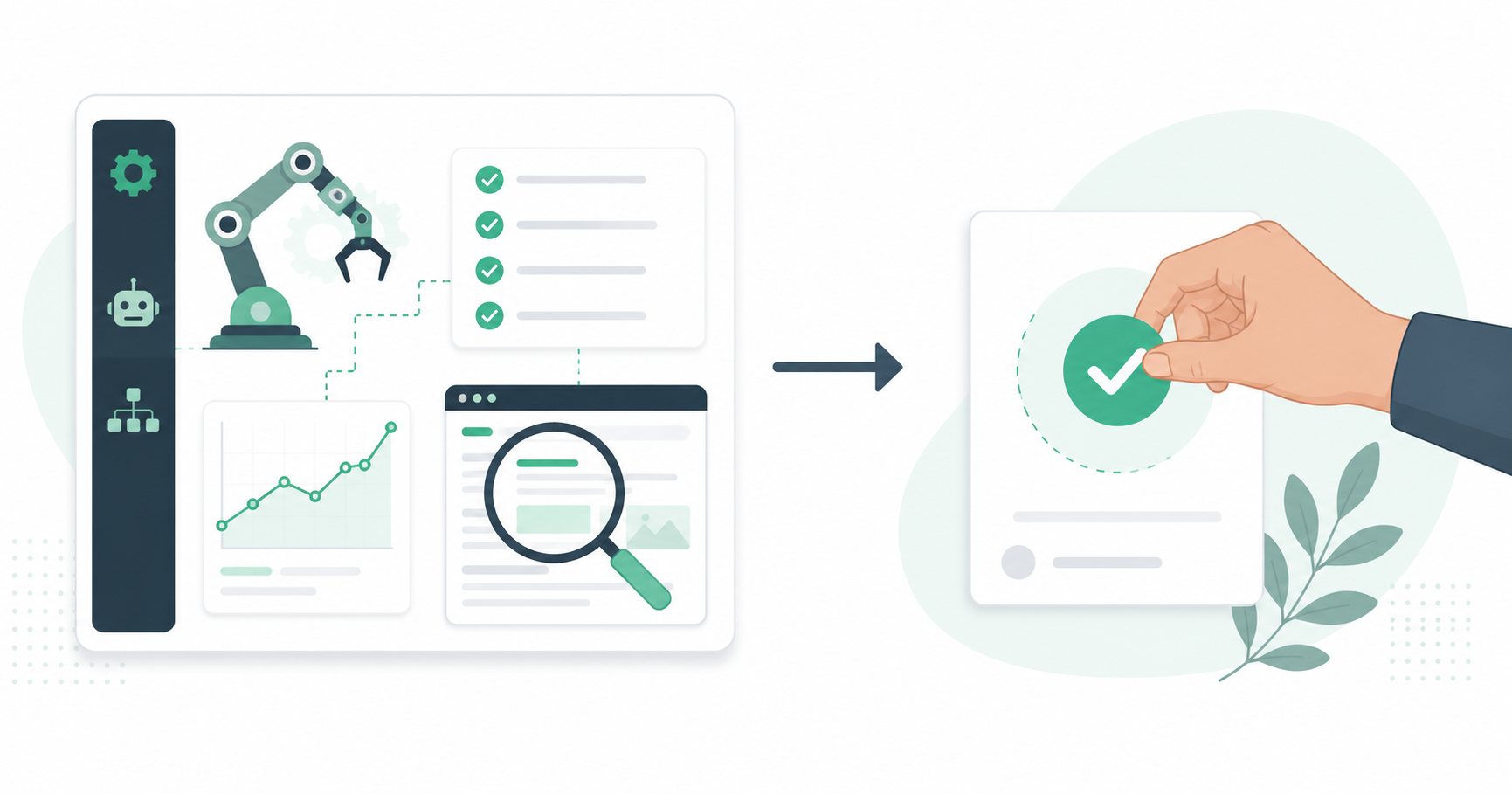
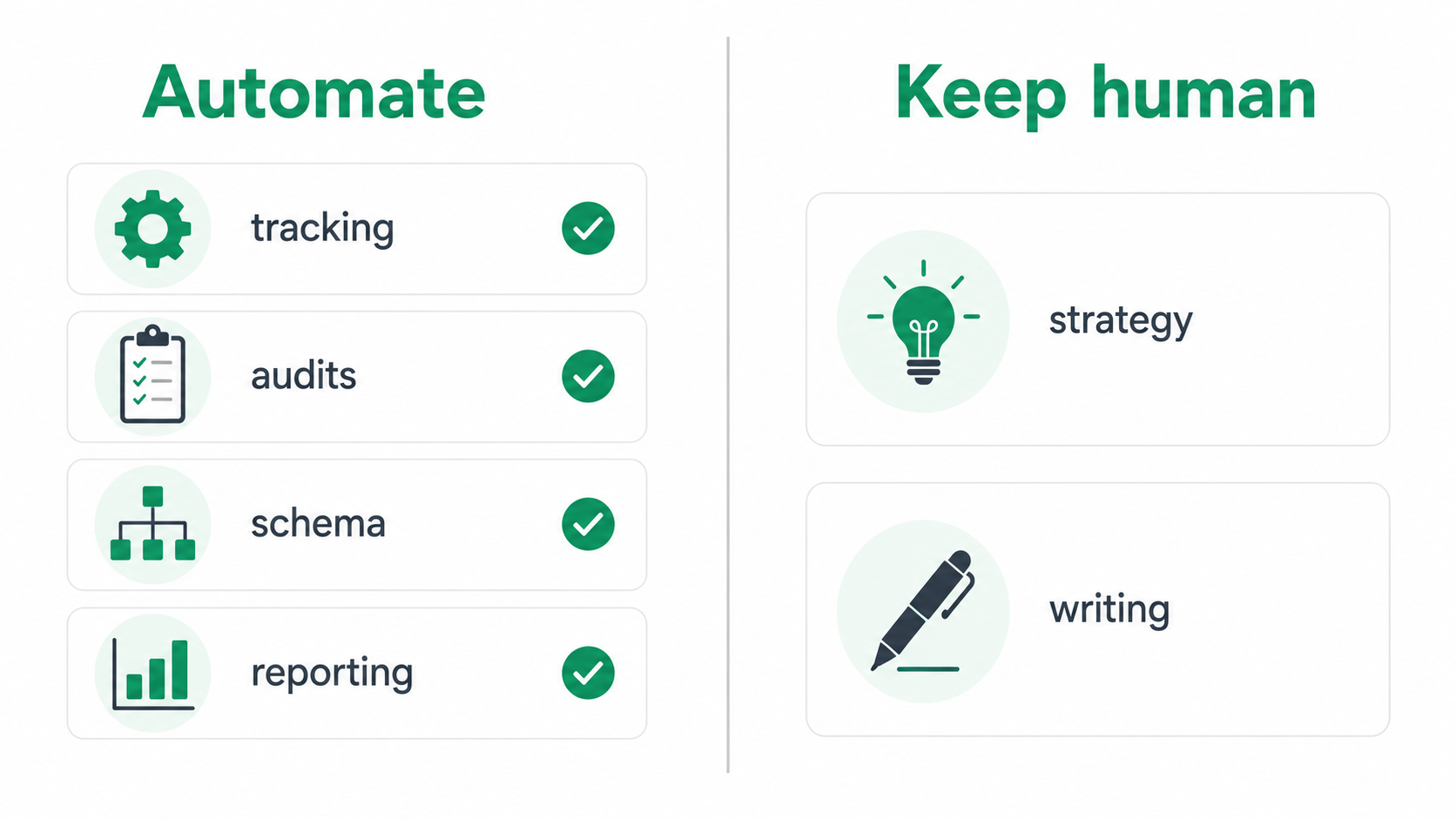
- Automate the rules-based work: visibility tracking on Google and in AI answers, technical audits, schema drafts, internal links, and reporting.
- Do not automate judgment: strategy and writing worth reading still need a human.
- Keep a human in the approval seat. Automate the production, never the point of view.
What SEO automation actually means
SEO automation is using software to do the parts of search optimization that follow rules, so a person does not have to do them by hand. That is the whole idea. It is not a machine that "does your SEO" while you sleep, whatever a landing page told you. The useful version is narrower and more honest: it takes the repetitive checks, drafts, and reports off your plate and leaves you the judgment calls.
The reason it matters more now than two years ago is that search split in two. You still want to rank on Google, but you also want ChatGPT, Perplexity, and Google's AI Overviews to name your brand when someone asks. Checking that second surface by hand, across every prompt a buyer might type, is the kind of work nobody can keep up with. That is exactly where automation earns its place.
What you can safely automate
These are the rules-based, easy-to-verify jobs. A machine does them and a human approves the output. Clean split, low risk.
Visibility tracking, on Google and in AI answers
Rank tracking is old news. The newer, more useful version is tracking whether ChatGPT, Perplexity, and Google's AI Overviews name your brand. Running those prompts daily by hand does not scale, so this is the clearest win for automation.
Technical audits
Crawlability, broken links, redirect chains, render checks, page speed, and missing structured data are all rules a machine checks faster and more consistently than a person. The audit should run on a schedule, not once a quarter when something breaks.
Structured data and on-page basics
Schema markup, meta titles and descriptions, alt text, and FAQ blocks follow patterns. A tool can draft them and flag what is missing. You still review, but you are editing a draft instead of starting from nothing.
Internal linking
Surfacing which new page should link to which existing one, and where, is a graph problem a machine is good at. It proposes the links, you approve the ones that make sense.
Reporting
Pulling the numbers into a weekly view, flagging what moved, and tying a change to a result is pure busywork. Automating it gives you back the hours and removes the copy-paste errors.
What you should not automate
Strategy is the obvious one. Deciding which topics are worth your time, who you are really competing with, and what story your brand tells is judgment, and a tool that guesses it for you usually guesses generic. The other one is the writing itself. You can draft with AI, but shipping raw AI output at volume is how sites end up with hundreds of pages that rank for nothing and read like everyone else's.
The thing that actually earns rankings and citations is the detail only you have: the real example, the number from your own data, the opinion you are willing to put your name on. No model has that. So the rule is simple. Automate the production, never the point of view.
Where AI agents fit, and where they overreach
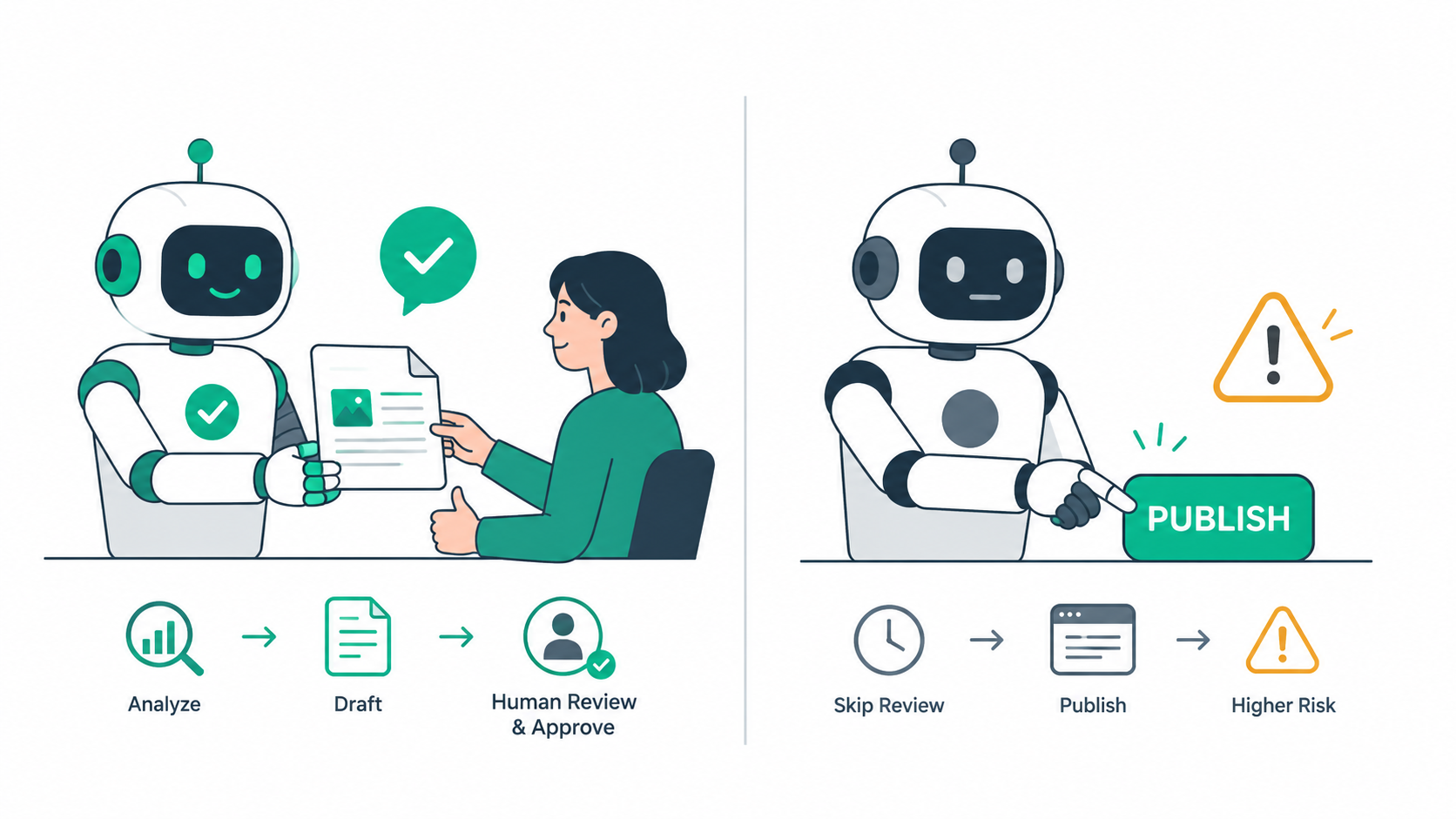
Classic automation runs fixed rules: it tracks, audits, and reports. An AI SEO agent is the newer layer that decides what to fix and then drafts the actual change, like a rewritten product description, a schema block, or an outreach email. That is genuinely useful, because the gap most tools leave is the one between "here is the problem" and "here is the fix in your hands."
Where agents overreach is when they also press publish. An agent that drafts a fix and waits for your approval is a force multiplier. An agent that writes and ships on its own, with no one reading it, is how you wake up to a brand voice you never approved and pages you cannot stand behind. Keep the human in the approval seat. Speed is the point, but not at the cost of the thing your name is on.
A sane automation workflow
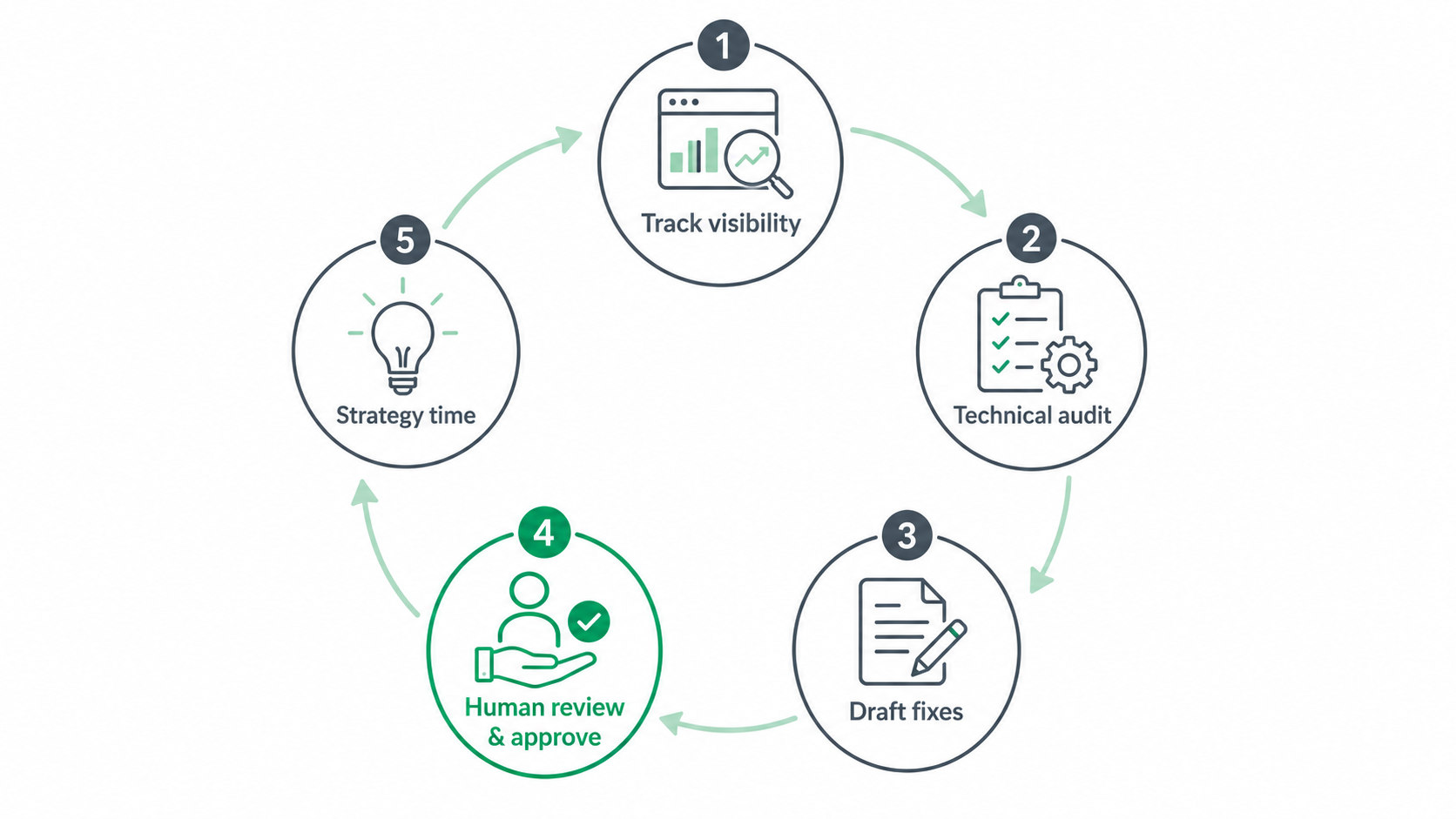
Track visibility daily
Let a tool track your visibility on Google and in AI answers every day, so you are working from current data instead of a guess.
Run the technical audit
Let it run the technical audit and surface what is broken or missing, ranked by impact.
Draft the rules-based fixes
Let it draft the rules-based fixes: schema, meta, internal links, FAQ blocks.
Review and approve
You review and approve. This is the step you never skip.
Spend the saved time on judgment
Spend the time you saved on the parts only a human does well: the strategy and the writing worth reading.
If you want the AI-visibility half of that loop handled for you, that is what we build. See how to track Perplexity citations for the manual version, or read what LLM visibility means for the measurement side.
See where you are invisible
WebGlazer is the SEO and AI-visibility team for businesses that do not have one. Enter your domain and it shows where you stand across Google and AI answers, checks your site's technical health, and hands you the top fixes and a content plan, already drafted, to review and apply. You stay in the approval seat.
Check your AI visibilityFrequently asked questions
Is SEO automation worth it, or is it just hype?
It is worth it for the repetitive, rules-based parts: rank and AI-visibility tracking, technical audits, internal-link suggestions, schema generation, and reporting. It is not worth it for the parts that need judgment, like strategy and genuinely useful writing. The honest line is that automation removes the busywork so a human spends their time on the decisions that actually move rankings.
What parts of SEO can you safely automate?
Monitoring (rank tracking, AI-visibility checks across ChatGPT, Perplexity, and Google's AI Overviews), technical audits (crawlability, broken links, render checks, structured data), reporting, and first drafts of structured content like meta titles, FAQ blocks, and schema markup. These are rules-based and easy to verify, so a machine doing them and a human approving them is a clean split.
Can AI write SEO content that ranks?
It can write a solid first draft, but raw AI output rarely ranks on its own. It tends to be generic, repeats what already exists, and misses the specific, first-hand detail that earns links and citations. The content that ranks is AI-drafted and human-edited: a person adds the real example, the opinion, and the fact only they know.
Will Google penalize automated content?
Google does not penalize content for being AI-assisted. It penalizes unhelpful, low-value content however it was made. The risk with full automation is not the tool, it is shipping thin pages at volume that say nothing new. Automate the production, keep a human on quality, and you stay on the right side of that line.
What is the difference between SEO automation and an AI SEO agent?
Classic SEO automation runs fixed rules on a schedule: it tracks, audits, and reports. An AI SEO agent goes a step further and decides what to do, then drafts the actual change, like a rewritten product description, a schema block, or an outreach email. The agent is the newer layer, and the sensible version still puts a human in the approval seat.
Does SEO automation work for AI search like ChatGPT and Perplexity?
Yes, and it matters more there, because checking by hand whether ChatGPT or Perplexity names your brand across dozens of prompts every day is not sustainable. Automated AI-visibility tracking runs those prompts on a schedule and reports how often you appear and who is named instead of you. WebGlazer does exactly this across ChatGPT, Perplexity, Gemini, and Google's AI Overviews.